
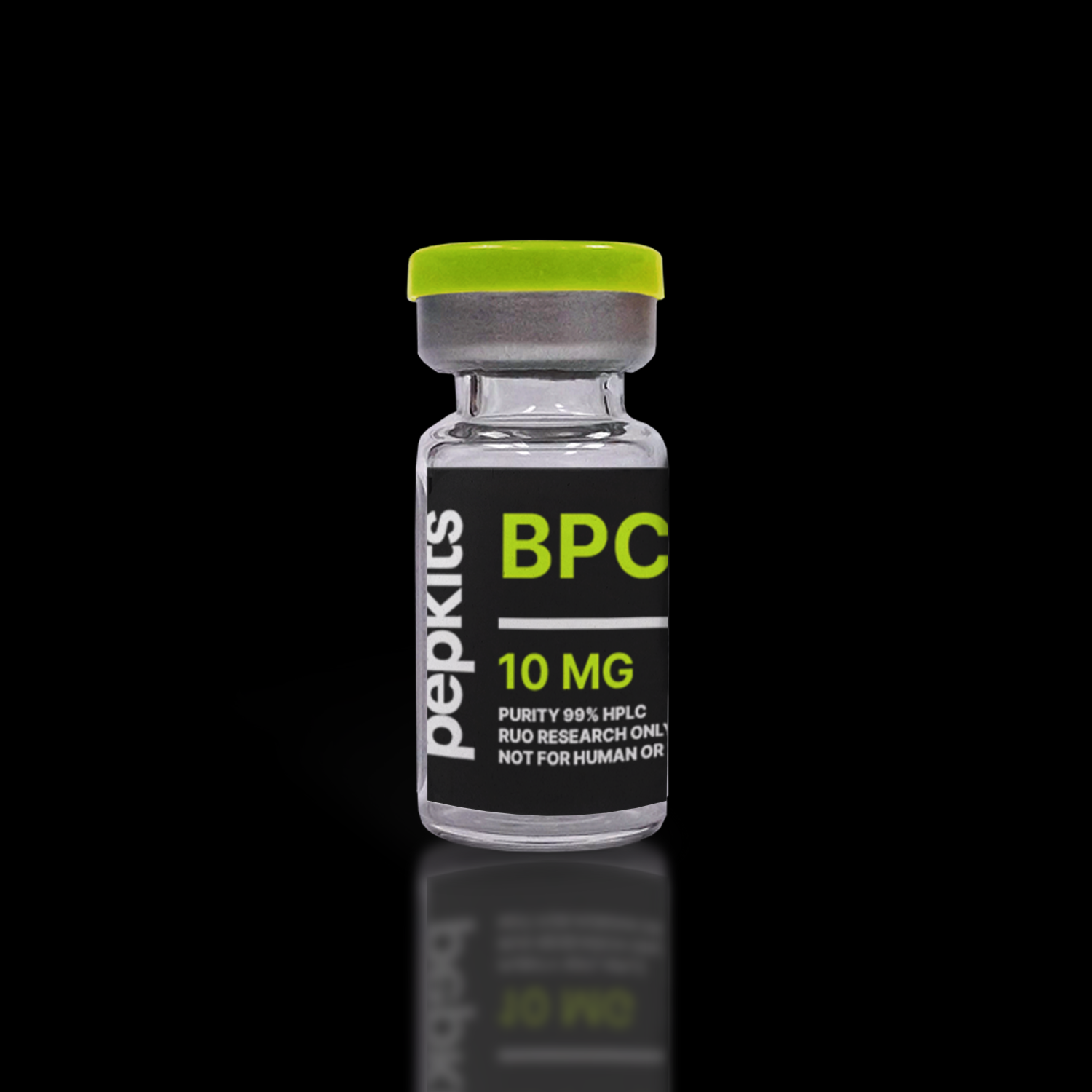
Buy Premium BPC-157 Research Peptide
High-Purity Laboratory Grade BPC-157
BPC-157 (Body Protection Compound 157) is a synthetic peptide derived from a sequence originally identified in gastric protein research. It is widely investigated in laboratory settings involving peptide biology, molecular signaling, cellular communication, protein interactions, and experimental biological models. Researchers use BPC-157 to study peptide behavior and cellular pathways under controlled scientific conditions.
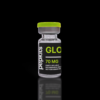
Pepkits Shop supplies premium laboratory-grade BPC-157 for universities, biotechnology companies, research institutions, and qualified scientific professionals. Every batch is manufactured and quality tested to deliver the purity, consistency, and reliability required for advanced laboratory investigations.
This product is intended exclusively for laboratory research purposes and is not intended for human consumption, therapeutic use, veterinary applications, or diagnostic procedures.
What Is BPC-157?
BPC-157 is a synthetic peptide consisting of 15 amino acids. It has become one of the most widely studied research peptides due to its stability and its usefulness in laboratory investigations involving peptide-mediated cellular mechanisms. Scientists continue to examine its biochemical properties, molecular interactions, and signaling pathways using controlled research models.
Research Applications
BPC-157 is commonly investigated in laboratory studies involving:
- Peptide biology
- Molecular biology
- Cellular signaling
- Protein interaction research
- Angiogenesis research
- Cell migration studies
- Biotechnology research
- Biochemical investigations
- Experimental biology
- Laboratory peptide research
These applications are intended exclusively for scientific and laboratory research.
How to Use
For Research Use Only: BPC-157 is intended exclusively for laboratory and scientific research by qualified professionals. Handle the peptide using appropriate laboratory equipment and established safety procedures. Store the product under recommended laboratory conditions, typically refrigerated, to help preserve its stability and integrity. Preparation and use should be carried out only in controlled laboratory environments following validated research protocols and institutional guidelines. This product is not intended for human consumption, therapeutic use, veterinary applications, or diagnostic purposes. Users are responsible for proper storage, handling, documentation, and disposal in accordance with applicable laboratory regulations and accepted scientific best practices.
Product Features
- High-purity research peptide
- Quality-tested for consistency
- Secure laboratory packaging
- Reliable batch quality
- Suitable for scientific investigations
Quality Assurance
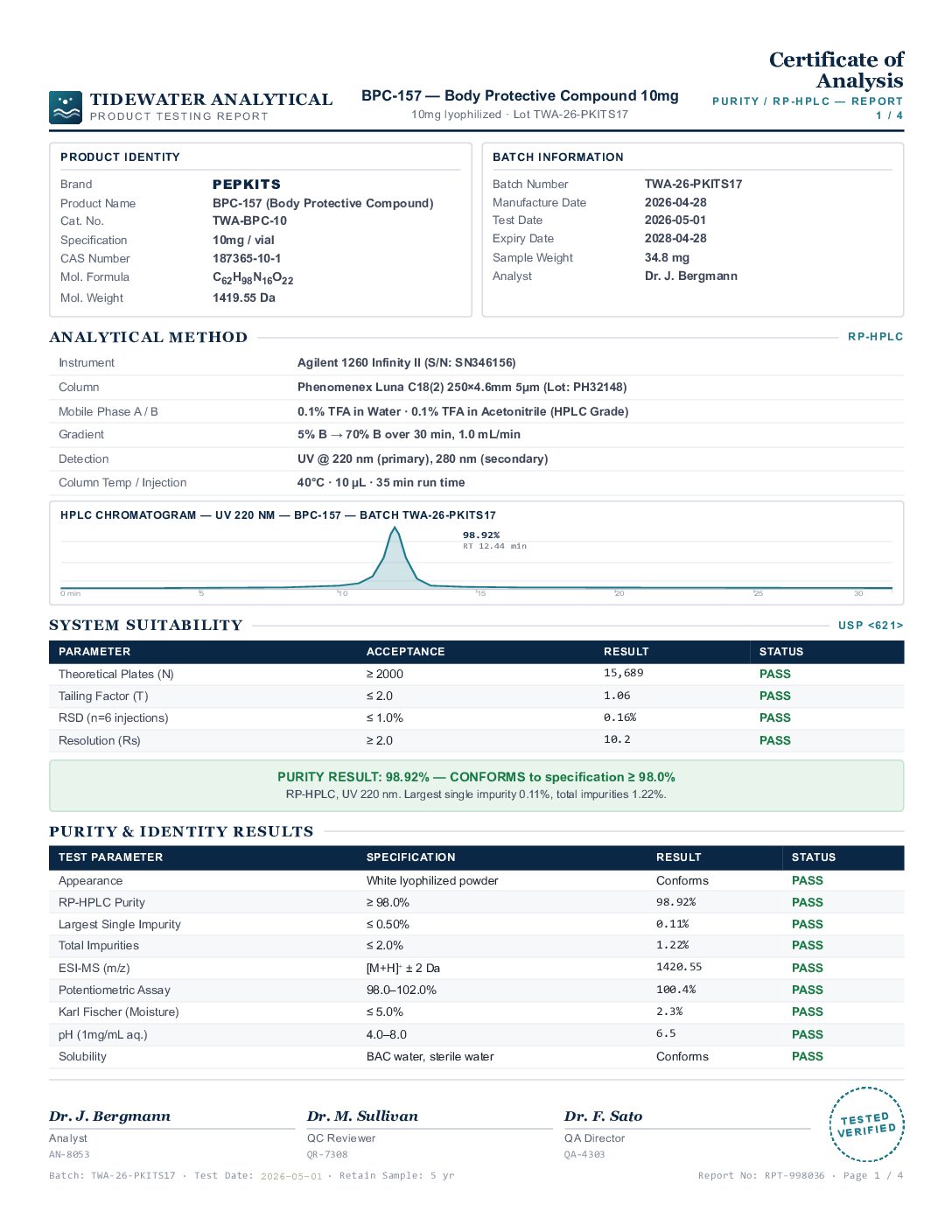
Pepkits Shop is committed to supplying premium research peptides manufactured to rigorous laboratory standards. Every batch is carefully tested for identity, purity, and consistency to support reproducible laboratory research.
Our manufacturing and quality control processes are designed to help researchers receive dependable products suitable for scientific investigations.
Storage Recommendations
For optimal laboratory stability:
- Store refrigerated according to laboratory protocols.
- Protect from excessive heat, moisture, and direct sunlight.
- Keep the vial tightly sealed until use.
- Handle using sterile laboratory techniques where appropriate.
Why Choose Pepkits Shop?
Pepkits Shop is committed to providing researchers with dependable laboratory products that meet high scientific standards.
When you choose Pepkits Shop, you receive:
- Premium laboratory-grade peptides
- High-purity research compounds
- Rigorous quality testing
- Reliable batch-to-batch consistency
- Secure packaging
- Fast order processing
- Trusted customer support
- Products designed for scientific research
Important Research Notice
This product is intended exclusively for laboratory and scientific research by qualified professionals.
It is not intended for:
- Human consumption
- Medical treatment
- Therapeutic applications
- Veterinary use
- Diagnostic procedures
- Cosmetic use
Researchers are responsible for complying with all applicable laws, regulations, and institutional policies regarding the purchase, storage, handling, and use of laboratory research materials.
Frequently Searched Terms
Researchers frequently search for:
- Buy BPC-157
- BPC-157 peptide
- Laboratory-grade BPC-157
- Research peptides
- Peptide research compounds
- Biotechnology research peptides
- Premium peptide supplier
- Scientific laboratory chemicals
Pepkits Shop is dedicated to supplying premium laboratory research peptides while supporting responsible scientific research and laboratory compliance.
Reviews
There are no reviews yet.